USU Holds Public Lecture on Nuclear Energy and Composite Materials with a Michelin France Engineer
Published At
26 June 2025
Published By
Fenny Julistine Tarigan
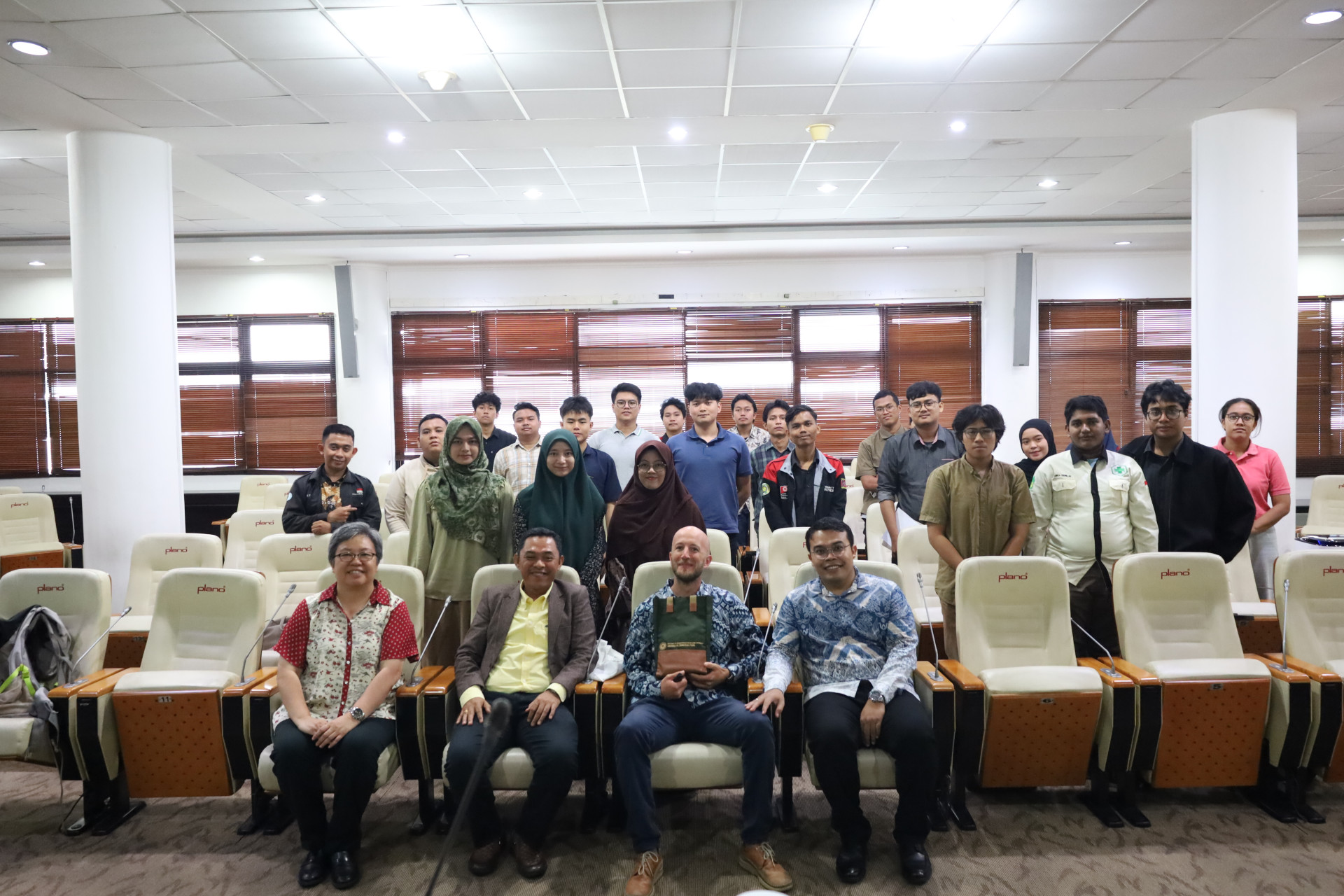
Universitas Sumatera Utara (USU) hosted public lectures entitled "Nuclear Energy: From Extremely Small Fission Scale to Extremely Large Worldwide Impact" and "Composite Materials: Diversity of Use and Focus on Mechanical Design." The event, held in collaboration with Alliance Française Medan, took place on Wednesday, June 25, 2025, at the Academic Senate Meeting Room, 3rd Floor, USU Rectorate Building.
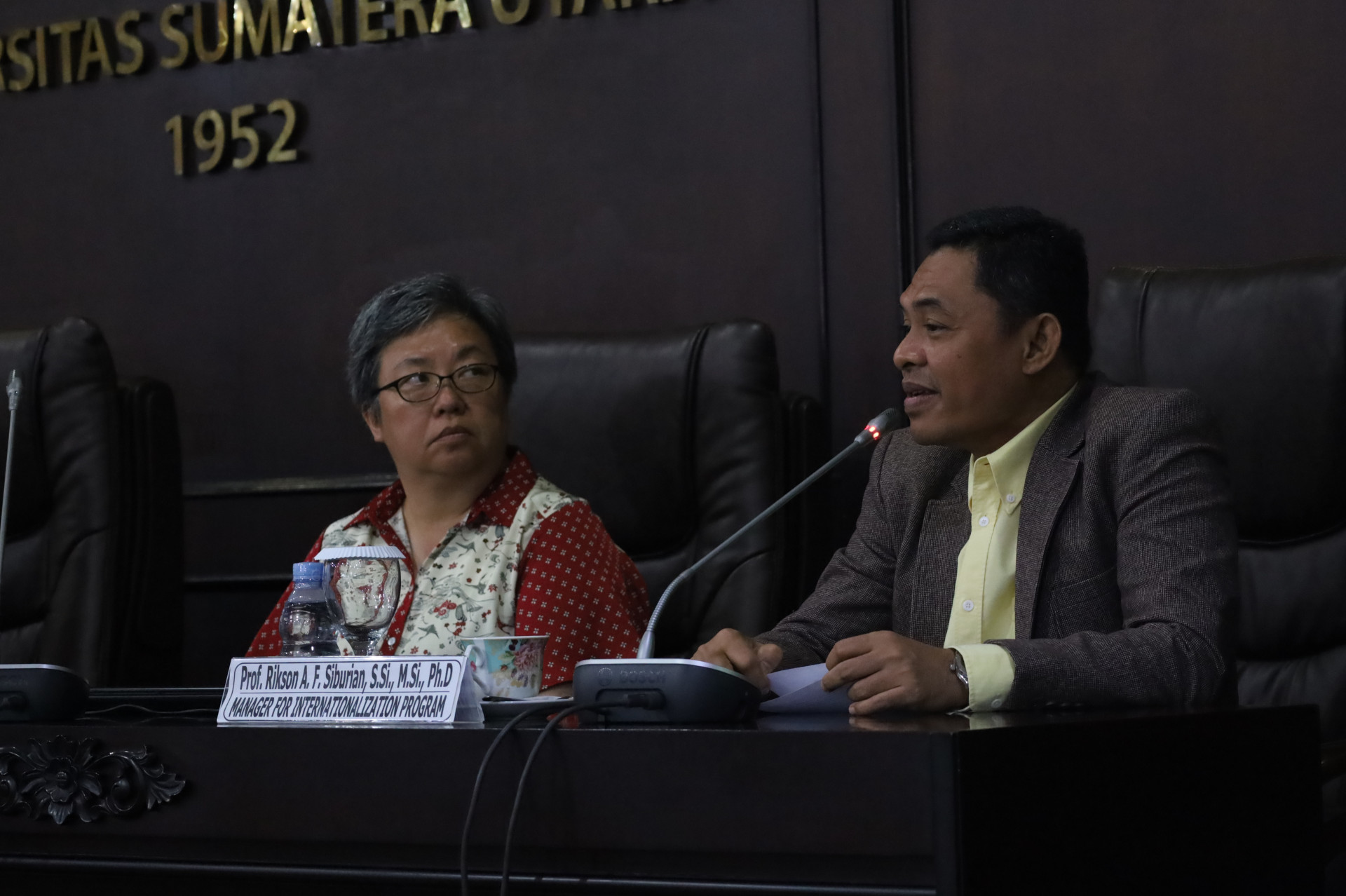
The keynote speaker was Rémi de Reynal, a Research and Development Mechanical Engineer at Michelin, France. USU's Manager officially opened the event for Internationalization, Prof. Rikson Asman Fertiles Siburian, S.Si., M.Si., Ph.D., who encouraged the USU academic community to take pride in their almamater and contribute to strengthening the university's internationalization process.
"When asked about the world's best universities, people often answer Oxford, Harvard, or Cambridge. Rarely does anyone say 'Universitas Sumatera Utara.' But if we take pride in our almamater, that is part of building our campus's international profile," he stressed.
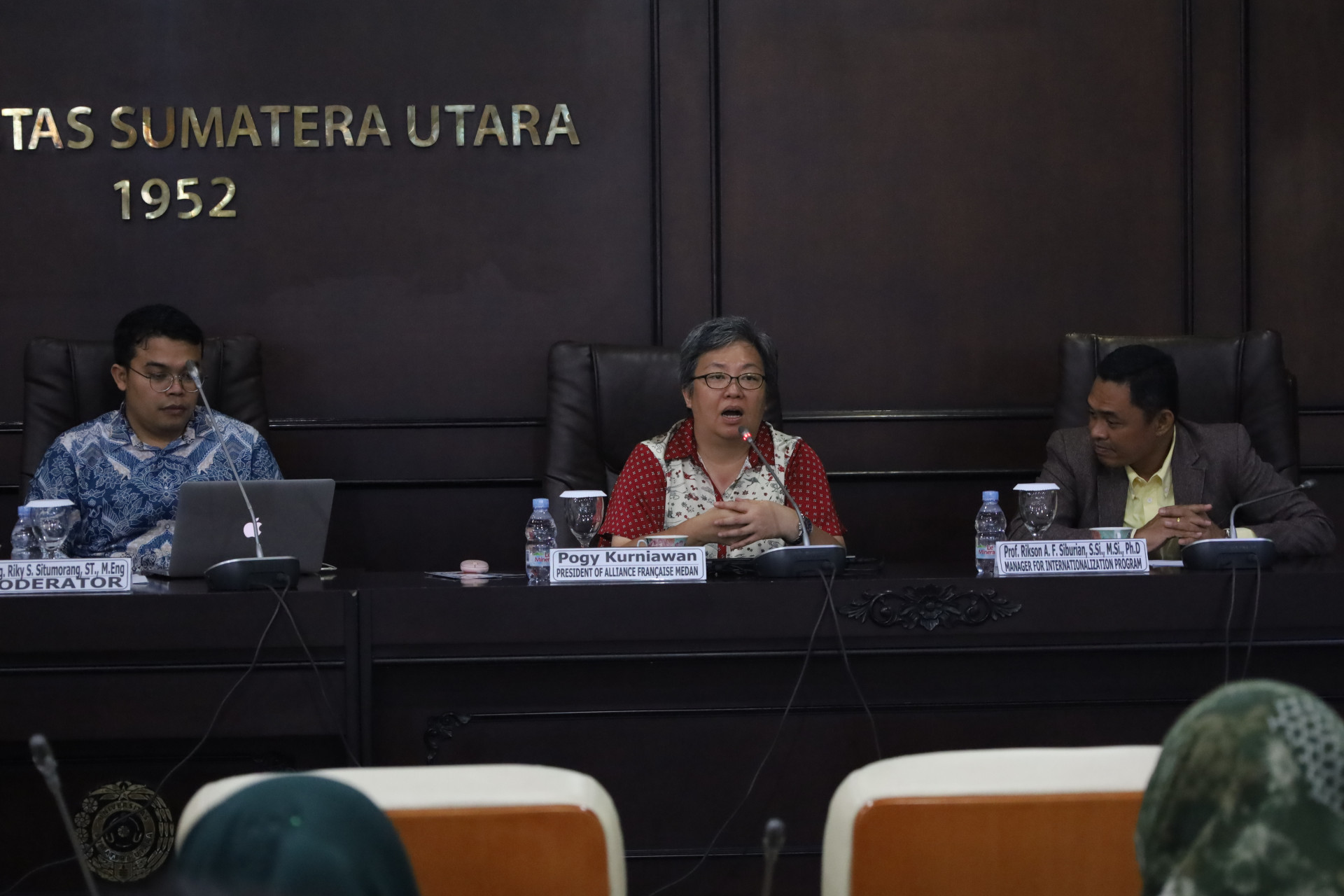
The President of Alliance Française Medan, Pogy Kurniawan, also expressed appreciation for the event and hoped for stronger future collaboration between Indonesia and France in education.
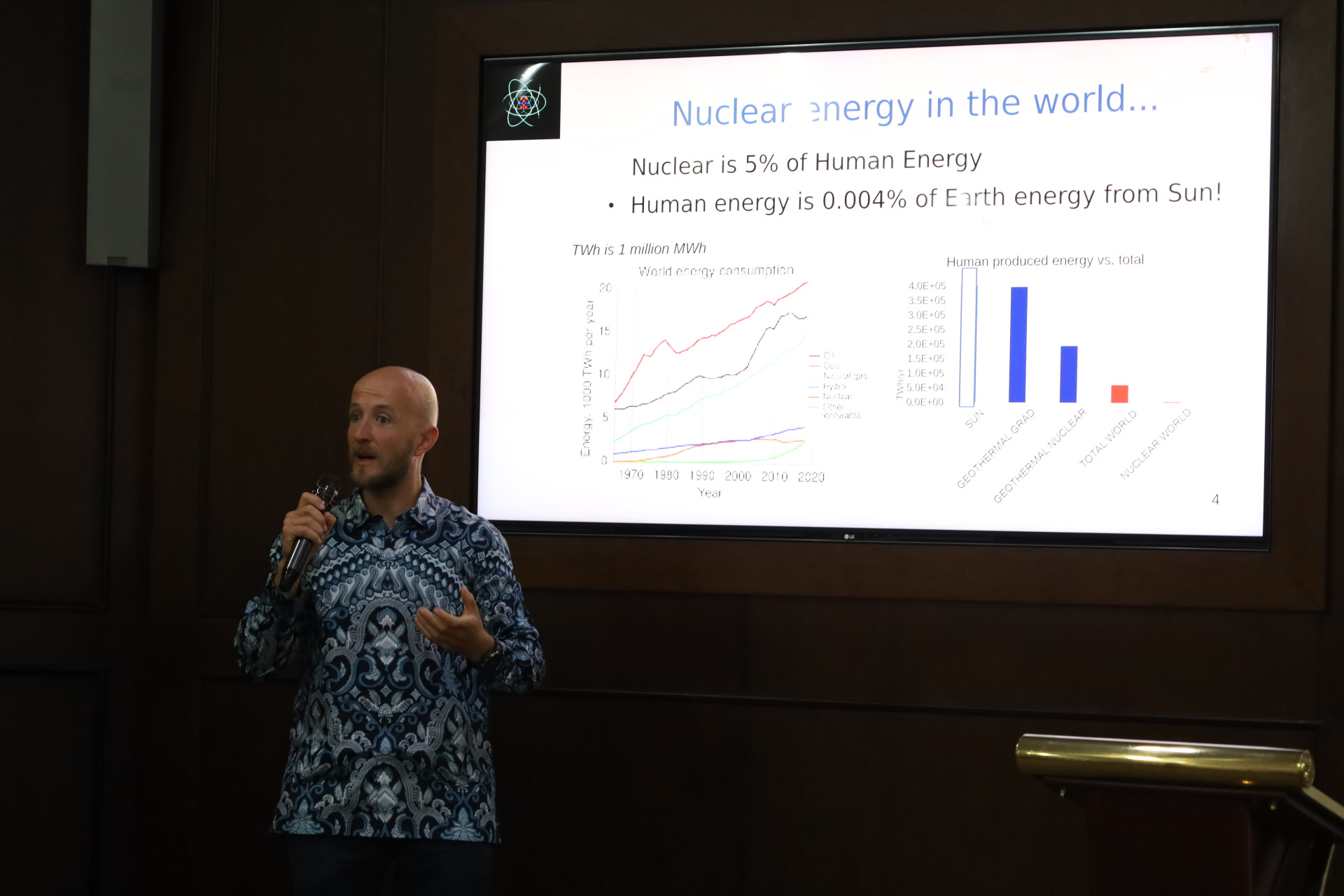
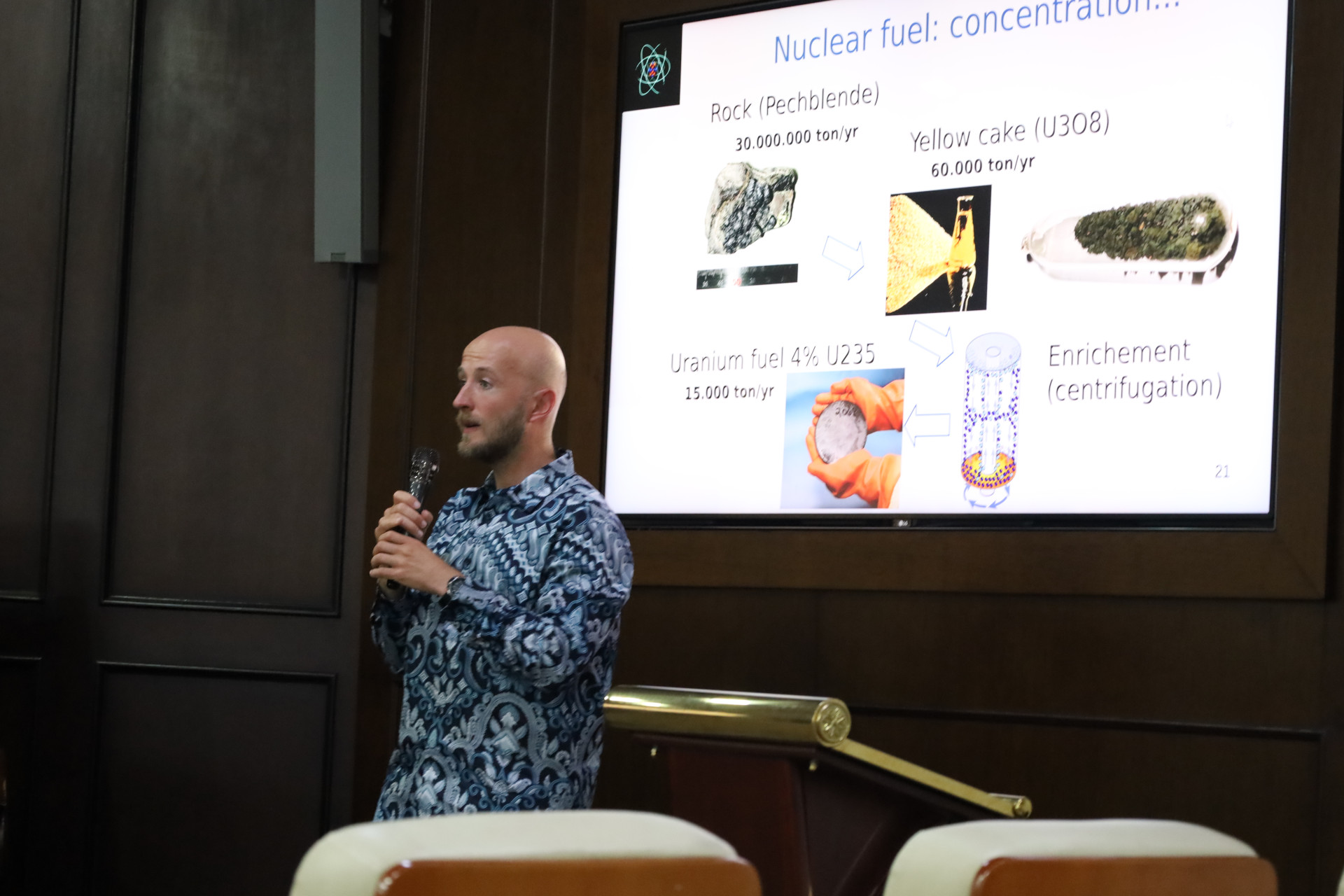
The first session covered Nuclear Energy, providing an in-depth explanation of how energy is generated from nuclear fission. Rémi explained that atomic energy is one of the most efficient sources, with only 0.7% of total uranium usable as nuclear fuel.
"Controlling nuclear reactions is not easy. In one fission process of uranium-235, an average of 2.4 neutrons is produced, but the reaction cannot be sustained without precise neutron absorption control," he explained.
Rémi also noted that nuclear power currently contributes around 5% of global energy consumption and significantly reduces carbon emissions, equivalent to saving one billion tons of oil and three billion tons of CO₂ annually. However, he emphasized that nuclear waste remains a significant challenge due to its dangerous nature for thousands to hundreds of thousands of years.
The afternoon session focused on Composite Materials, exploring their applications in industries ranging from automotive and aerospace to sustainable infrastructure. Rémi explained how composite materials offer strong, lightweight, and durable solutions for modern engineering needs.
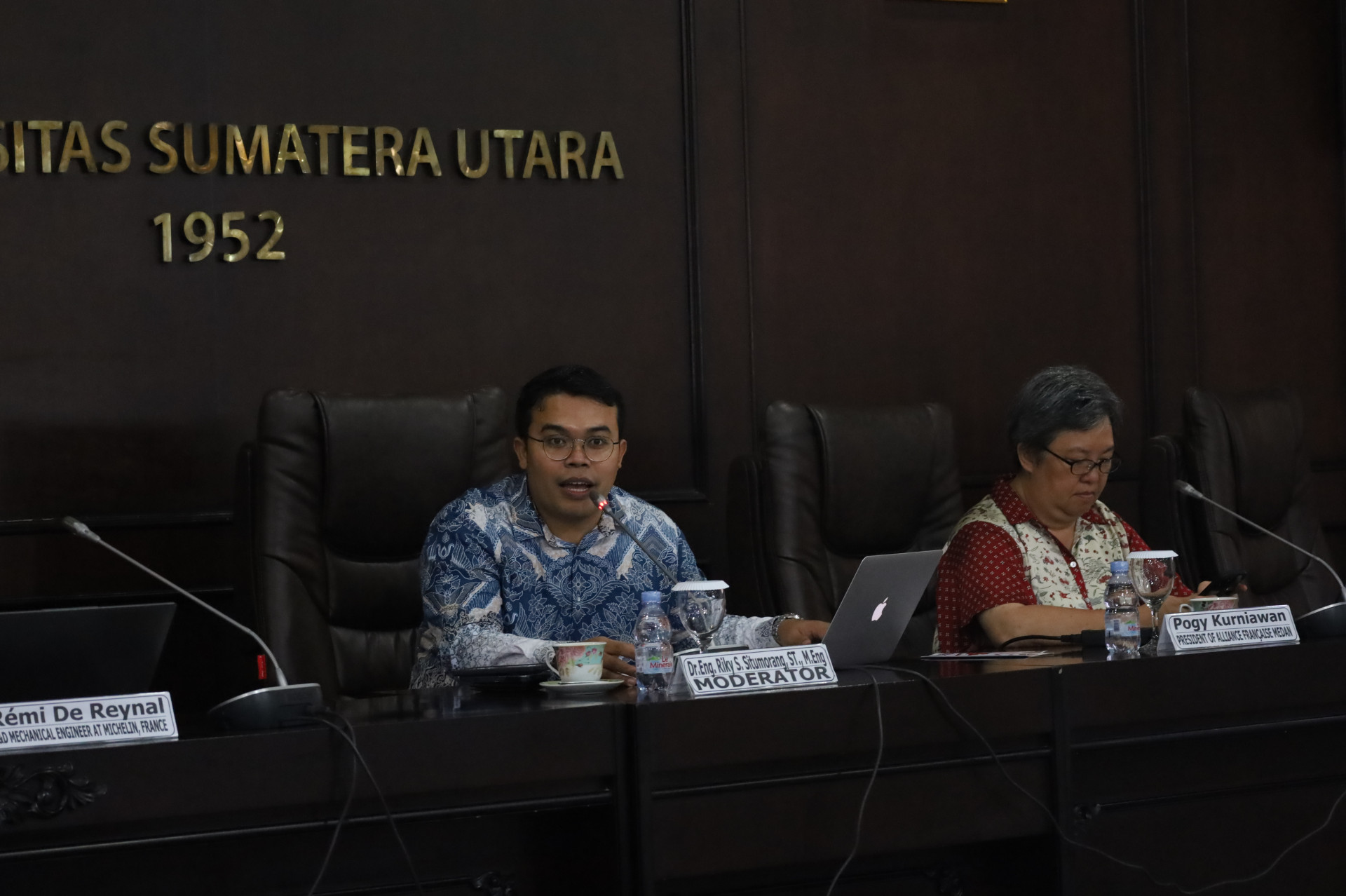
Moderated by Dr. Eng. Riky Stepanus Situmorang, S.T., M.Eng., the lecture concluded with a lively discussion, with participants asking questions about safe nuclear energy management and its environmental impacts.
This public lecture is part of USU's ongoing efforts to enhance its international academic reputation, expand knowledge on global issues in energy and materials, and strengthen its global networks.