


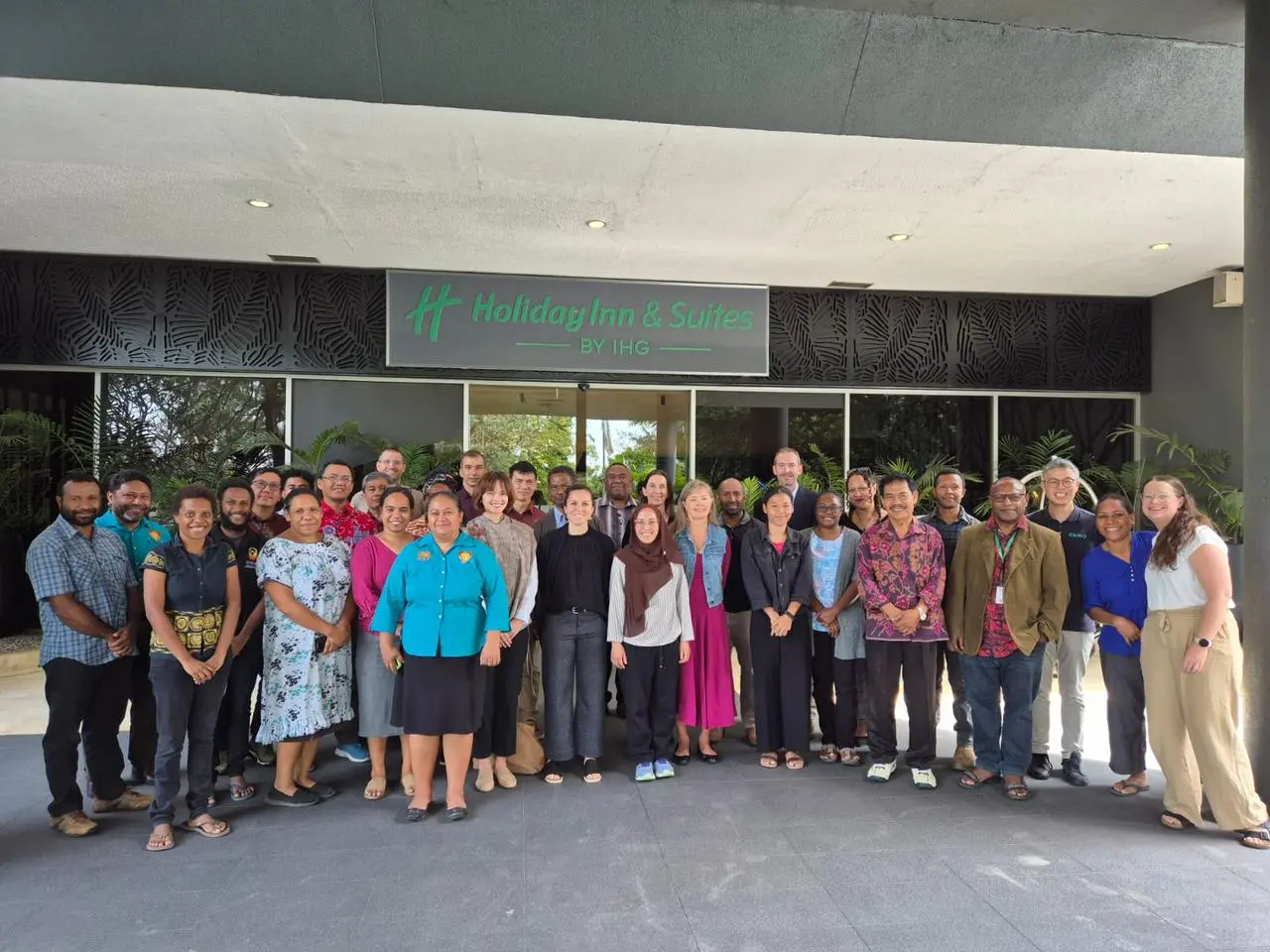
Port Moresby — Universitas Sumatera Utara (USU), through its Faculty of Medicine, participated in the USDA Indo–PNG Japanese Encephalitis Workshop held on May 19–21, 2026, at the Holiday Inn Conference Centre, Port Moresby, Papua New Guinea. The event marked the first workshop of the project partners for the initiative titled “A One Health Approach to Understanding Japanese Encephalitis Virus Ecology and Transmission in Indonesia and Papua New Guinea,” supported by the U.S. Department of Agriculture (USDA).
The international workshop brought together partners from five countries: Indonesia, Papua New Guinea, Japan, Australia, and the United States. The forum convened research institutions, universities, government agencies, as well as animal and public health partners to discuss strengthening Japanese Encephalitis Virus (JEV) surveillance through the One Health approach. Indonesian institutions involved in the workshop included the Faculty of Medicine of Universitas Sumatera Utara, Disease Investigation Center Denpasar, the Faculty of Veterinary Medicine of Universitas Udayana, and the National Research and Innovation Agency (BRIN).
Representing the Faculty of Medicine USU, Inke Nadia D. Lubis, MD, PhD, attended as one of the speakers in the Review of JEV in Indonesia session, presenting a topic entitled “Human and Paediatric JE in Indonesia: Surveillance, Burden and Lessons for a One Health Approach to JEV Ecology and Transmission.” In the presentation, the Faculty of Medicine USU emphasized that Japanese Encephalitis remains a significant public health issue because it is endemic in Indonesia, predominantly affects children, and requires cross-sector collaboration.
.jpeg)
“USU’s involvement in this forum reflects the university’s commitment to strengthening research contributions and international collaboration, particularly in infectious diseases, child health, and the One Health approach,” said a representative from the Faculty of Medicine USU.
Japanese Encephalitis is one of the leading causes of viral encephalitis in Asia. According to the presented materials, there are approximately 100,000 clinical JE cases globally each year. The disease has a relatively high fatality rate, particularly in encephalitis cases, and some survivors may experience long-term neurological disorders. In Indonesia, JE transmission has been confirmed in 29 out of 34 provinces, making strengthened surveillance an important priority for disease prevention and control efforts.
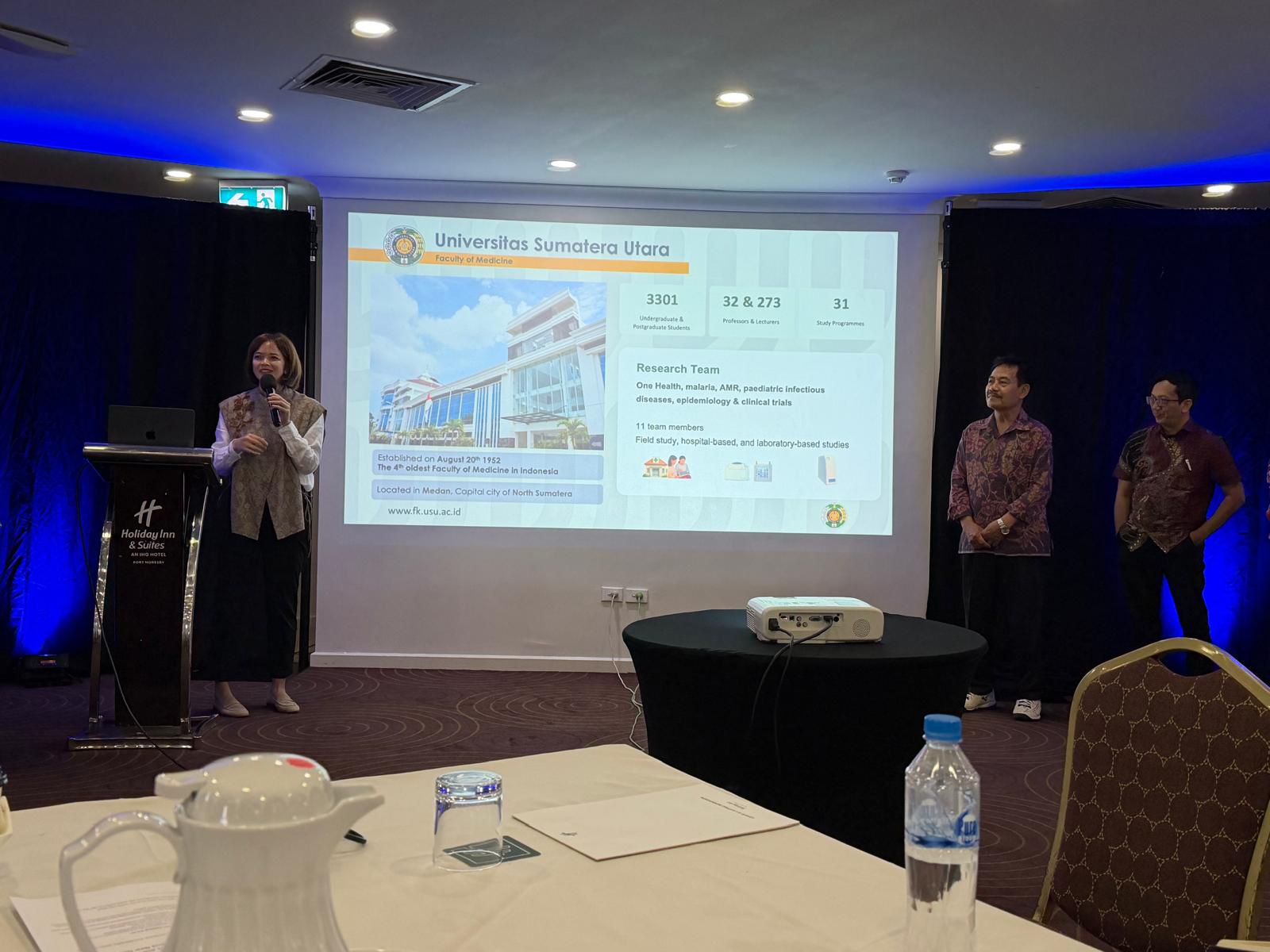
“Japanese Encephalitis cannot be understood solely from the perspective of human health. The disease is closely related to animals, mosquitoes as vectors, rice field environments, water birds, livestock farming, and climate change. Therefore, the One Health approach is highly relevant,” explained Inke Nadia D. Lubis during the presentation.
Throughout the three-day workshop, participants discussed various strategic agendas, including evaluating results and lessons learned from previous surveillance projects, reviewing the objectives of the current project, planning activities for each key objective, and identifying opportunities for harmonization and standardization of surveillance and laboratory activities. The forum also served as a platform for partners to strengthen networks, introduce new team members, and identify knowledge gaps related to the epidemiology and ecology of JEV, particularly interactions among hosts, vectors, and environmental factors influencing disease transmission.
.jpeg)
The workshop also explored experiences and perspectives from different countries. On the first day, participants discussed the JEV situation in Papua New Guinea and Indonesia, including surveillance in humans, animals, and mosquitoes. The second day focused on global JE perspectives, complementary vector-borne disease projects in Indonesia and Papua New Guinea, and project implementation planning. Meanwhile, the third day included field visits to the Boroma pig farm, the Pacific Adventist University wetland area as a potential water bird surveillance site, and Port Moresby Nature Park as a potential wildlife surveillance site.
For USU, participation in this activity aligns with the university’s efforts to expand academic and international research networks, particularly in public health, infectious diseases, zoonoses, and vector-borne diseases. The involvement of the Faculty of Medicine USU also strengthens the university’s position as an institution actively engaged in the development of One Health studies, an approach integrating human, animal, and environmental health.
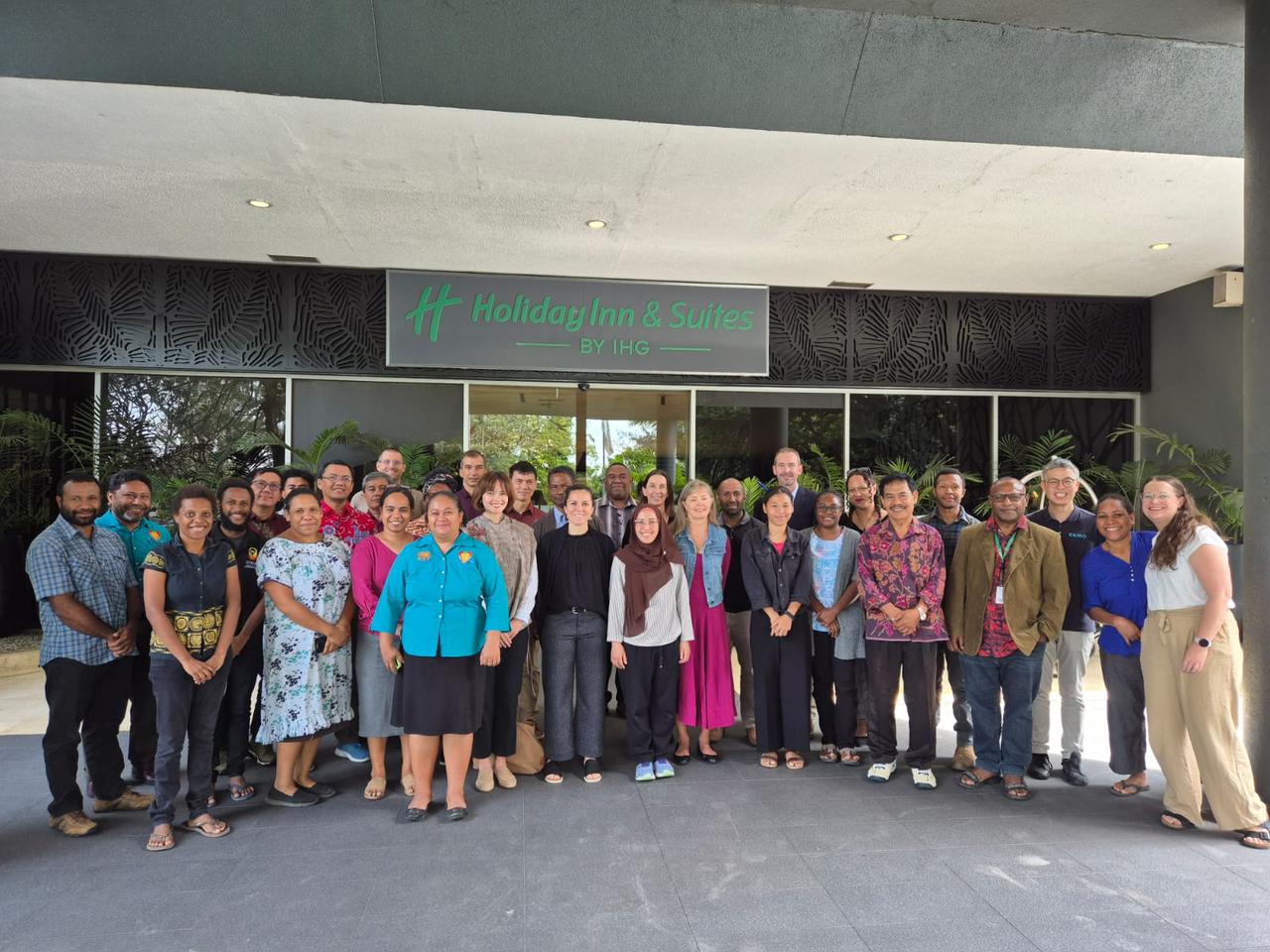
Moving forward, this collaboration is expected to strengthen the Japanese Encephalitis surveillance system in Indonesia, improve diagnostic and laboratory capacities, and support the development of data-driven policy recommendations. In addition, this cross-country partnership opens opportunities for further research collaboration between USU and international partners in understanding JEV transmission patterns, ecological risk factors, and more effective and sustainable prevention strategies.